
Table of Contents
- Start With the Builder Material Specifications
- Questions to Ask a Home Builder About Materials Before You Sign
- Your New Construction Material Checklist for Each Phase
- How to Verify Builder Material Quality on Site
- Why an Independent New Construction Inspection Matters
- Common Mistakes Buyers Make When Checking Materials
- Conclusion: Turn Material Verification Into a Habit
- Frequently Asked Questions
Last Updated: October 12, 2026
Start With the Builder Material Specifications
Learning how to verify builder material quality starts with one document: the written specifications. Builder material specifications are the written list of every product, brand, and grade the builder promises to install in your home. That list is your baseline. Without it, you have nothing to check against, and marketing brochures do not count.
At New Home Hub SWFL, we tell every buyer the same thing: the spec sheet is the contract's quietest page and its most important one.
Where Specifications Live in Your Contract
Specifications usually sit in an addendum or exhibit attached to the purchase agreement. Ask for it by name before you sign anything.
Look for these documents:
- The specification addendum or "spec sheet"
- The plan set with material callouts
- Any allowance schedule for finishes
- The builder's standard features list
If a builder cannot point you to a written spec list, treat that as a warning sign.
Spec Levels: Base, Upgrade, and Structural
Most builders sell in three tiers. Base specs are what comes standard. Upgrade specs cost extra and get chosen at a design center. Structural specs cover framing, foundation, and roof systems that cannot change later.
The trap is mixing them up. A gorgeous model home often shows upgrade finishes while the base price covers none of them. Ask which tier every item on your tour falls into.
Questions to Ask a Home Builder About Materials Before You Sign
The best questions to ask a home builder about materials are the ones that force a written answer. Verbal promises disappear. Paper does not.
Start with the framing. Ask what species and grade of lumber goes into the walls, and whether the quote covers engineered or solid wood. Then move outward:
- What brand and model is the HVAC system?
- Which window manufacturer and product line?
- What insulation type and R-value?
- What's the roof underlayment and shingle brand?
- Which plumbing fixture brands, and at what tier?
Questions That Reveal Substitution Risk
Substitution is the quiet risk in new construction. A builder may swap a specified product for a cheaper one when supply runs short.
Ask directly: "What happens if a specified material is unavailable?" The answer should be in writing. A fair contract requires the builder to request your approval before any swap, and to match or exceed the original spec.
Also ask how the builder documents substitutions and whether you get notice before installation. If the answer is vague, get it in writing before you sign.
Your New Construction Material Checklist for Each Phase
A new construction material checklist keeps you organized by build phase. Materials arrive at different stages, so your checks should follow the same timeline.
Here is the phase-by-phase view:
| Phase | What to Check | When |
|---|---|---|
| Foundation | Concrete mix design, rebar size and spacing, vapor barrier | Before pour |
| Framing | Lumber grade stamps, engineered lumber ratings, fastener type | During framing |
| Roofing | Underlayment, shingle brand, flashing material | Before shingles go on |
| Windows | NFRC labels, frame material, glass type | At delivery |
| Insulation | R-value, batt or spray foam, installation depth | Before drywall |
| Finishes | Cabinet brand, countertop material, fixture models | At installation |
Foundation, Framing, and Roofing
These three phases hide the most. Once drywall covers the framing, you cannot see it again without cutting in.
For the foundation, confirm the concrete mix and rebar layout match the plans before the pour. For framing, check that lumber grade stamps match the spec. For roofing, confirm the underlayment and flashing before shingles cover them.
Windows, Insulation, and Finishes
Windows carry an NFRC label showing energy ratings. Confirm the label matches your spec sheet before installation.
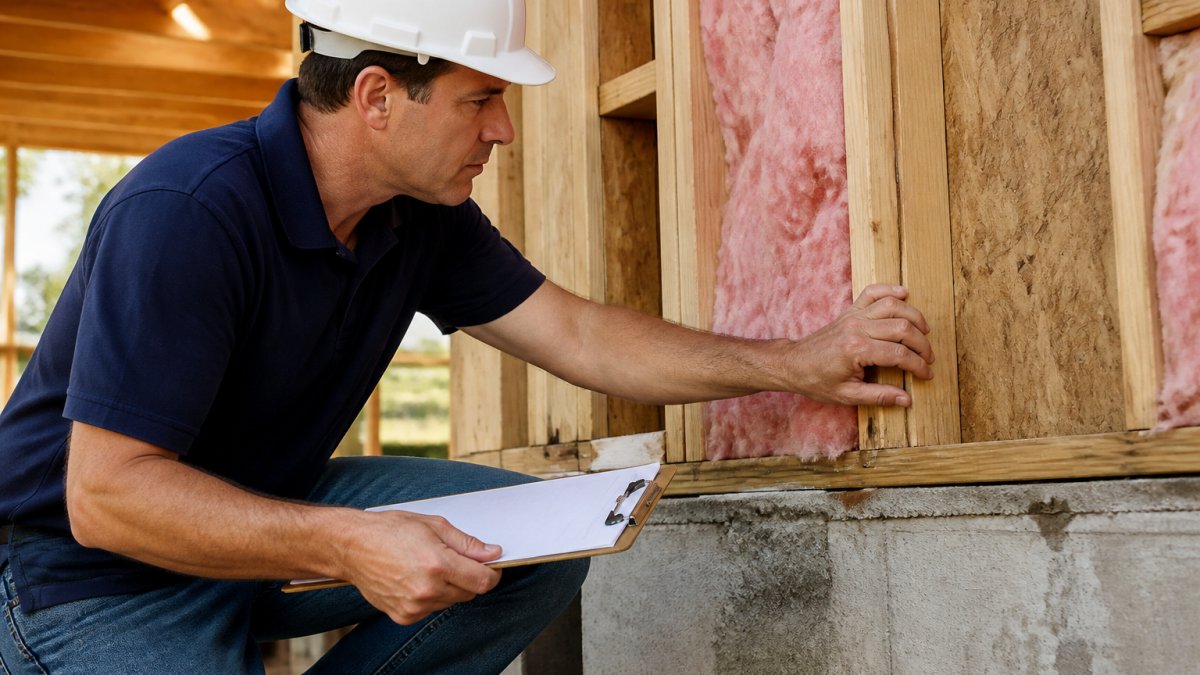
Insulation is easy to under-install and hard to see later. Check the R-value against the spec before drywall goes up. Finishes come last but get the most attention, so compare cabinet and fixture brands to your upgrade list line by line.
How to Verify Builder Material Quality on Site
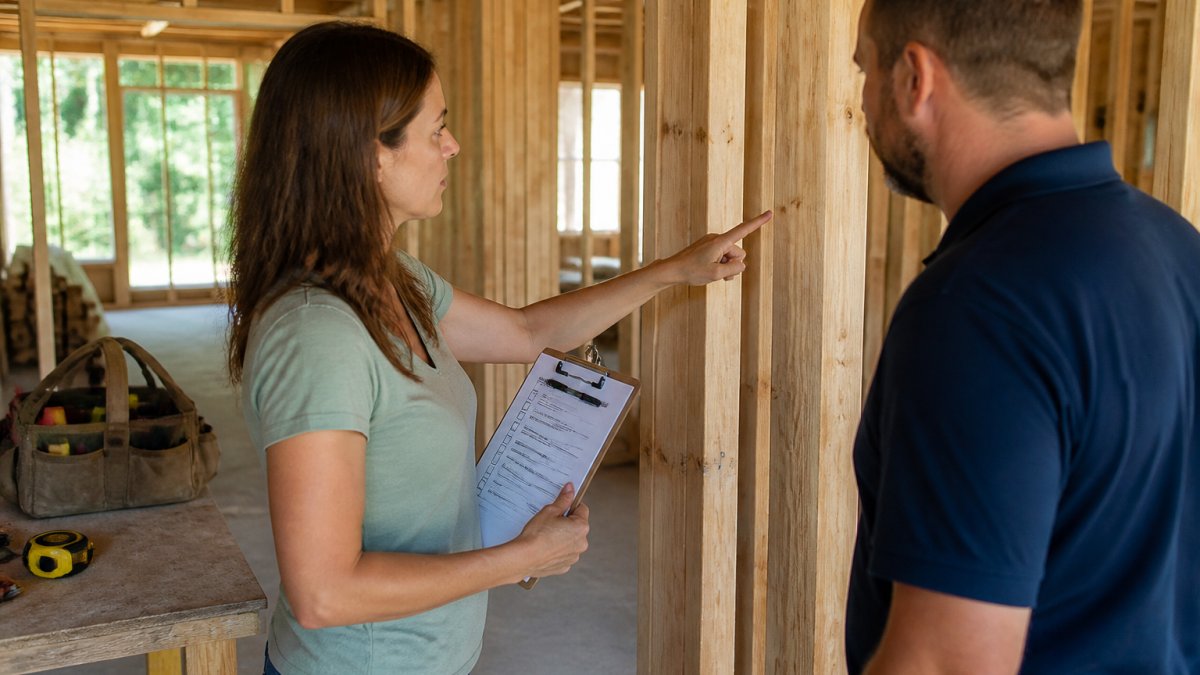
On-site verification comes down to reading labels and catching swaps early. You do not need to be a contractor to do this well. You need a printed spec sheet, a phone camera, and the willingness to ask.
Reading Stamps, Labels, and Grade Marks
Every regulated building material carries a mark. Lumber has a grade stamp showing species and grade. Windows have an NFRC label. Electrical and plumbing fixtures carry listings from recognized testing labs.
Compare each mark to your spec sheet. If a stamp does not match, ask before installation continues. The U.S. Department of Energy guidance on windows explains how to read NFRC ratings, which helps when you check window labels.
Spotting Substitutions Before They Get Covered Up
Substitutions happen fast. The window is short, often a single day.
Walk the site weekly during active phases. Compare delivered materials to your spec list. When something looks different, ask for the substitution approval in writing. Builders who document swaps are easy to work with. Builders who resist are telling you something.
Why an Independent New Construction Inspection Matters
An independent new construction inspection gives you a trained set of eyes at key milestones. The inspector works for you, not the builder, and reports what they find in writing.
Schedule inspections at three points:
- Pre-drywall, before insulation and drywall hide the framing
- Pre-closing, before you accept the home
- Warranty period, before coverage expires
A pre-drywall inspection catches framing, electrical, and plumbing issues while they are still visible. The U.S. Department of Housing and Urban Development offers resources on home inspections and buyer protections. For most buyers, this is the single highest-value check in the process.
New Home Hub SWFL reimburses third-party home inspections at closing up to $500, so this step costs you less than it should.
Common Mistakes Buyers Make When Checking Materials
The most common mistake is trusting the model home. Model homes showcase upgrades the base price does not include.
Other frequent errors:
- Accepting verbal promises instead of written specs
- Skipping the pre-drywall walkthrough
- Not photographing phases before they get covered
- Ignoring substitution language in the contract
- Waiting until closing to raise material questions
Each mistake shares a root cause: starting too late. Material verification is a habit you build from contract signing through warranty, not a single event.
Conclusion: Turn Material Verification Into a Habit
Verifying builder material quality is not a one-time task. It is a habit you practice at every phase, from the first contract review to the final warranty walk. Buyers who build that habit catch problems while they are cheap to fix.
New Home Hub SWFL helps buyers compare local builders, review written specifications against marketing claims, and manage warranty follow-ups. We reimburse third-party inspections at closing up to $500 and connect you with a preferred real estate team through ViiBE Partners, brokered by Starlink Realty.
Explore your options with New Home Hub SWFL and walk into your final walkthrough knowing exactly what was built.
Frequently Asked Questions
How can I check the quality of building materials before they are installed?
Ask your builder for the material specifications and submittal sheets before installation. Then visit the site during the framing and rough-in stages to look for grade stamps on lumber, ACI-certified concrete tickets, and manufacturer labels on windows and roofing. If you cannot read a stamp or label, photograph it and ask the builder to confirm it matches the contract. A third-party inspector can also verify materials before drywall covers them up.
What documents should a builder provide for construction materials?
Request the written specifications, product data sheets, and any substitution requests. For structural items like lumber and concrete, ask for grade stamps and batch tickets. For windows, roofing, and insulation, ask for manufacturer labels and installation instructions. If your contract includes an allowance for finishes, get the exact brand and model in writing. Keep copies of everything so you can compare what was promised with what is delivered.
How do I verify that materials match the specifications in my contract?
Create a simple checklist from your contract's spec section. During each phase, walk the site with that list and verify the brand, model, and grade of each item. Check lumber stamps, window labels, and roofing bundle tags. If something does not match, document it with photos and a written note to the builder. An independent new construction inspection can also confirm compliance before the next phase begins.
Should an independent inspector check materials during construction?
Yes. An independent inspector who works only for you can verify materials at key stages: foundation, framing, pre-drywall, and final. They check grade stamps, fastening schedules, and installation details that are easy to miss. Because they are not employed by the builder, they can flag substitutions or poor workmanship without conflict. Schedule inspections before drywall goes up so problems can be corrected while they are still visible.