
Table of Contents
- What New Home Builders Will Actually Negotiate
- A Room-by-Room Upgrade Prioritization Framework
- How to Compare Builder Upgrade Prices With Independent Contractors
- New Home Builder Design Center Tips Before Your Selection Appointment
- Is It Better to Upgrade Through the Builder or After Closing?
- A New Construction Upgrade Negotiation Script and Step-by-Step Offer Strategy
- Lot Premiums, Construction Timelines, and Change-Order Deadlines
- Contract, Financing, and Appraisal Implications of Builder Incentives
- Frequently Asked Questions
Last Updated: October 9, 2026
What New Home Builders Will Actually Negotiate
Yes, new home builders negotiate, but rarely on the base price. They move on incentives, closing-cost credits, rate buydowns, and upgrades. At New Home Hub SWFL, buyers who ask for a price cut get a polite no; those who ask for the right package get real value.
That changes how you approach negotiating upgrades with new home builders. The list price is fixed to protect comparable sales, so builders guard it closely. Their room to move sits in three buckets:
- Financing incentives like mortgage rate buydowns
- Closing-cost credits applied at settlement
- Upgrades and add-ons from the design center
Ask for the wrong bucket and you stall; ask for the right one and you gain thousands without touching the sticker price.
Base Price Versus Incentives: How Builders Structure Deals
Builders protect the base price because every sale sets a comparable for the next buyer and for appraisals. Drop it and the community's value slides.
So they hold the purchase price and offer incentives instead:
- A closing-cost credit toward your loan fees
- A rate buydown that lowers your interest rate for a set period
- A design credit you spend on upgrades
The trick is knowing which incentive is worth most to you. A rate buydown can save more over the life of the loan than a one-time design credit, while closing-cost help frees up cash at signing.
Closing Costs, Rate Buydowns, and Financing Incentives
Financing incentives are where builders have the most flexibility, especially with their preferred lender. A rate buydown cuts your monthly payment; closing-cost assistance reduces your cash at signing.
Here is how to compare them:
| Incentive Type | What It Does | Best For | Watch Out For |
|---|---|---|---|
| Closing-cost credit | Covers loan and title fees | Buyers short on cash | May not cover everything |
| Rate buydown | Lowers your interest rate | Long-term owners | Tied to preferred lender |
| Design credit | Funds upgrades | Buyers wanting finishes | Often expires at selection |
| Lot premium waiver | Cuts the home-site charge | Buyers eyeing a premium lot | Limited to slow-selling lots |
A Room-by-Room Upgrade Prioritization Framework
Not all upgrades are equal. Some add lasting value and are painful to add later; others cost far less after closing. Our rule at New Home Hub SWFL: upgrade what is hard to change, skip what is easy.
Use this framework before your selection appointment.
Structural and High-Impact Upgrades Worth the Money
Prioritize anything buried in the walls or tied to the structure, expensive or impossible to change later.
- Electrical and lighting rough-ins for future fixtures
- Plumbing rough-ins for extra baths or outdoor kitchens
- Structural changes like added square footage or moved walls
If a builder offers a structural option you might want later, decide now. Adding it after the slab is poured or drywall is up means a change order, higher cost, and possible delays.
Cosmetic Upgrades to Skip and Handle After Closing
Cosmetic finishes are usually cheaper to handle yourself after move-in, since design centers mark them up.
- Light fixtures and fans you can swap in a weekend
- Paint colors beyond the standard palette
- Backsplash and accent tile that a local installer can add
The exception is flooring: if you want it changed everywhere, doing it through the builder before move-in can beat living through a renovation.
How to Compare Builder Upgrade Prices With Independent Contractors
Comparing a builder's upgrade price to a contractor's quote is not apples to apples. The builder's number bundles design-center overhead, project management, warranty coverage, and financing convenience; a contractor's quote is just labor and materials. To compare fairly, normalize both sides.
A Practical Comparison Method
Run every upgrade through the same five-step test:
- Get the builder's itemized price in writing. Ask for the line-item cost, not a bundle. Bundles hide which upgrades are marked up and which are near cost.
- Request a written quote from a licensed local contractor for the same scope, materials, and finish level. Insist on brand, model, and square footage.
- Add the financing cost to the builder's price. At a 6% rate, a $5,000 upgrade rolled into a 30-year mortgage costs roughly $10,800; a contractor paid in cash after closing costs $5,000.
- Subtract the value of the builder's warranty. Builder work is typically covered under the home's warranty for a set period. Independent work usually carries only the contractor's own warranty, which may be shorter or tied to that company staying in business.
- Check whether outside work is even allowed. Many builders restrict which trades can enter during construction, and some prohibit outside contractors until after closing. Read your purchase agreement first.
Where the Builder Usually Wins
Structural work, rough-ins, and anything behind the drywall almost always belong with the builder:
- Permits and inspections are already pulled under the builder's scope. Adding a separate contractor mid-construction can trigger re-inspection fees and delays.
- Sequencing matters. A plumber who arrives after the drywall is up costs far more than one who roughs in during framing.
- Warranty coverage stays clean. If an outside contractor touches a wall the builder later has to repair, the builder may disclaim responsibility for that area.
Where the Contractor Usually Wins
Cosmetic finishes after closing are typically cheaper through an independent contractor:
- Light fixtures and ceiling fans, a licensed electrician can swap these in a few hours.
- Interior paint, a painter can repaint a whole home in days for a fraction of a design-center charge.
- Backsplash and accent tile, a tile setter's labor rate is usually well below the builder's markup.
The Warranty Tradeoff Nobody Mentions
If you hire an outside contractor and something fails, you call that contractor, not the builder. If they are unlicensed, uninsured, or go out of business, you absorb the loss. Verify their license, ask for a certificate of insurance, and get warranty terms in writing. A cheaper quote from an unvetted contractor is not a bargain.
Consumer Financial Protection Bureau guide to mortgage closing costs
New Home Builder Design Center Tips Before Your Selection Appointment
Walk into your selection appointment with a plan and a budget cap. The design center is built to upsell, and unprepared buyers often spend more than they intended.
Before you go:
- Set a firm design budget and write it down
- Know your priority list from the room-by-room framework
- Ask which upgrades hold value in your community
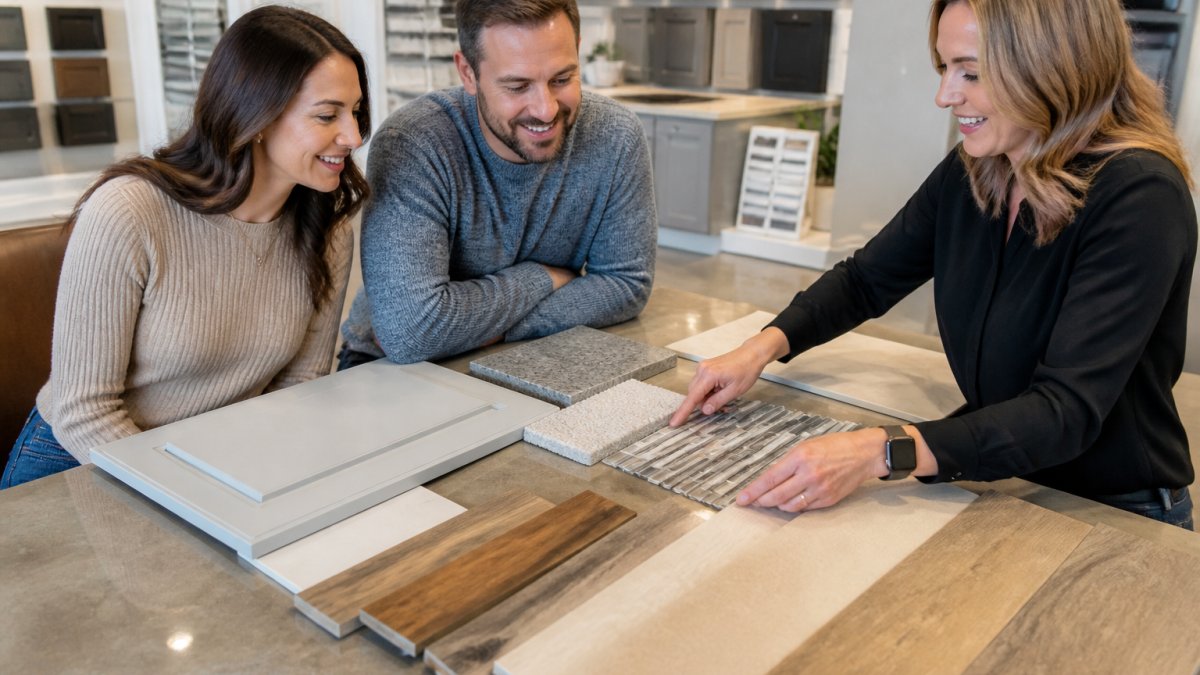
Ask the consultant one key question: which options are structural and which are cosmetic? That answer tells you what is worth doing now.
Is It Better to Upgrade Through the Builder or After Closing?
It depends on the upgrade. Structural and hard-to-change items belong with the builder. Cosmetic finishes usually cost less after closing.
Upgrade through the builder when:
- The work is structural or behind the walls
- You want it financed into the mortgage
- You want it covered by the builder's warranty
Upgrade after closing when:
- The item is cosmetic and easy to swap
- A local contractor quotes less
- You want to avoid interest on the upgrade
The honest answer is that most buyers do both. They use the builder for the bones and handle the finishes themselves.
U.S. Department of Housing and Urban Development guidance on homebuying
A New Construction Upgrade Negotiation Script and Step-by-Step Offer Strategy
Negotiation with a builder is a sequence, not a single conversation. The buyers who get the most treat it like a multi-round offer. Here is a strategy from first contact to signed contract.
Step 1: Do the Research Before You Talk Numbers
Before your first serious conversation, know three things:
- Comparable sales in the community and nearby new-construction communities.
- Current inventory, how many completed or near-complete homes the builder is carrying.
- Days on market for the specific plan you want. A plan sitting for 90+ days gives you leverage a plan selling in two weeks does not.
Step 2: Open With Incentives, Not Price
Builders protect the base price because every sale sets a comparable for the next buyer and for appraisals. Asking for a price cut signals you do not understand how they operate. Open with:
"What incentives are available on this home right now, and which ones can be combined?"
That question does two things: it lets the sales rep show you what they already have authority to offer, and it reveals which incentives are stackable.
Step 3: Sequence Your Asks Across Rounds
Do not dump every request at once. A pattern that works:
- Round 1: Ask about standing incentives. Take notes. Do not commit.
- Round 2: Bundle a closing-cost credit with a design credit. Cite a comparable home or a slow-moving lot.
- Round 3: If the builder holds firm, ask for a lot premium waiver or an upgrade you know is near cost (rough-ins, insulation) instead of a headline credit.
Each round gives the sales rep something to take to their manager. A single big ask often gets a single no.
Step 4: Value the Upgrade Package Against Cash
A design credit and a closing-cost credit are not equal. Run the math.
- A $10,000 design credit spent on cosmetic finishes may deliver $6,000-$7,000 of real value after design-center markup.
- A $10,000 closing-cost credit delivers $10,000 of cash savings at settlement.
- A permanent rate buydown worth $10,000 up front can save far more than $10,000 over the life of the loan, depending on the rate reduction and loan term.
Ask the builder to price each incentive separately. If they will not itemize, that itself is information.
Step 5: Put the Offer in Writing
Verbal promises mean nothing at closing. After each round, email a short summary:
"Confirming our conversation today: the builder will include a $X closing-cost credit and a $Y design credit on Lot Z, contingent on using the preferred lender. Please reply to confirm."
A written trail protects you if the rep leaves, the manager changes, or the terms get disputed at settlement.
Step 6: Set a Walk-Away Point
Know your total budget, price, upgrades, closing costs, and reserves, before you negotiate. Write it down. If the builder will not meet that number, walk. Builders respect a buyer who can actually close more than one who bluffs.
A Script You Can Adapt
"We love the home and we're ready to move forward. Before we sign, we'd like to see a closing-cost credit and a design credit included. We're comparing a few communities, and the total cost is what decides it for us.
That last line gives the builder a reason to move without insulting the price.
Lot Premiums, Construction Timelines, and Change-Order Deadlines
Lot premiums, timelines, and change orders all shape your final cost. Miss a deadline and you may pay more or lose the option.
- Lot premiums are extra charges for desirable home sites, like water views or corner lots. These are sometimes negotiable on slow-selling lots.
- Construction timelines vary by builder and demand. Get the schedule in writing.
- Change-order deadlines are firm. After a certain stage, changes cost more or get denied.
Federal Trade Commission guidance on home buying and contracts
Contract, Financing, and Appraisal Implications of Builder Incentives
Incentives affect your contract, loan, and appraisal. Read the fine print before you sign.
- Contract terms may tie incentives to a specific lender or closing date.
- Financing incentives like buydowns often require you to use the builder's preferred lender.
- Appraisals can be affected if incentives distort the recorded price.
A common mistake is treating a design credit as free money.
Negotiating upgrades with new home builders comes down to knowing where the real flexibility lives.
New Home Hub SWFL helps buyers see the full financial picture before they sign.
Frequently Asked Questions
Can you negotiate upgrades on new construction homes?
Yes, but builders rarely cut the base price. They prefer to offer upgrades, closing-cost credits, or rate buydowns because those protect their published pricing. Your leverage depends on market demand, inventory, and how far along the construction timeline is. Ask for a written quote on specific upgrades and compare it with independent contractor pricing. If the builder won't move on price, push for a higher upgrade allowance or a design center credit instead.
What upgrades are worth the cost in a new build?
Prioritize structural and hard-to-change items: additional square footage, extra bathrooms, upgraded insulation, and electrical rough-ins. These are expensive to add later. Cosmetic upgrades like light fixtures, mirrors, and paint are usually cheaper to handle after closing with your own contractor. Always compare the builder's upgrade price with an independent quote before committing, since builder markups on finishes can run high.
How much room is there to negotiate with home builders?
It varies by builder, community, and market conditions. In a slower market with standing inventory, builders may offer larger incentives such as closing-cost credits, rate buydowns, or free upgrade packages. In a competitive market with limited inventory, flexibility shrinks. Focus your negotiation on incentives rather than base price, and get everything in writing. A written quote makes it easier to compare offers across builders and spot where there is real room to move.
What should you avoid saying when negotiating with a builder?
Avoid revealing your maximum budget, expressing emotional attachment to a specific lot or floor plan, or saying you are ready to sign today. These statements reduce your leverage. Instead, ask open questions about what incentives are available, request a written quote, and mention that you are comparing other builders and communities. Keep the conversation factual and let the builder make the first offer.