
Table of Contents
- Why Risks of Buying New Construction Homes Matter
- Construction Delays and Schedule Uncertainty
- Hidden Costs Beyond the Base Price
- Understanding Your New Construction Home Builder Contract
- Construction Quality and Hidden Defects
- Creating a New Construction Home Inspection Checklist
- Builder Reputation and Developer Financial Stability
- Protecting Yourself: A Contingency Plan
- Frequently Asked Questions
Last Updated: October 11, 2026
Why Risks of Buying New Construction Homes Matter
Buying a new construction home is a major financial decision, yet many first-time buyers scrutinize it less than a resale purchase. Understanding the risks of buying new construction homes is critical.
New construction purchases carry unique challenges: you sign contracts before the home is built, trust a developer's timeline and quality standards, and navigate unfamiliar warranties and terms. Many buyers discover too late they didn't fully understand what they agreed to.
This guide covers the major risks of buying new construction homes and how to protect yourself at every stage.
Construction Delays and Schedule Uncertainty
Construction delays are common. Supply chain disruptions, labor shortages, and unforeseen site conditions often push timelines back by weeks or months.
Your contract completion date affects your financing, current home sale, and moving timeline. A three-month delay creates financial pressure. Your contract language determines whether you have recourse if the home isn't ready when promised.
Common causes of construction delays include:
- Backordered materials (windows, doors, appliances, electrical components)
- Labor availability and skilled trades shortages
- Site conditions requiring unexpected grading or drainage work
- Weather-related work stoppages
- Builder prioritizing other projects ahead of yours
Before signing, request written documentation of the expected completion date and any penalties for missing it. If the builder won't commit to a firm date, that's a red flag.
Hidden Costs Beyond the Base Price
The advertised base price rarely tells the full story. Most buyers are surprised by total costs once they factor in upgrades, closing costs, financing, and appraisal risks that can add tens of thousands of dollars.
Direct Costs: Upgrades, Closing, and Community Fees
Beyond the base price, expect to budget for:
- Upgrades and customizations: Flooring, countertops, fixtures, appliances, paint colors, and hardware. Upgrades alone can add 10-20% to your base price.
- Closing costs and title insurance: Typically 2-5% of the purchase price, including lender fees, appraisal, title search, and insurance.
- Property taxes and homeowner's insurance: First-year costs vary by location but are often higher for new construction (assessed at full value immediately).
- HOA fees and community infrastructure assessments: Monthly HOA dues plus one-time special assessments for roads, utilities, amenities, or common-area landscaping.
- Utility connections and deposits: Water, sewer, electric, gas, and internet hookups; some utilities charge deposits or require upfront infrastructure fees.
- Landscaping and exterior finishing: Sod, trees, mulch, driveway sealing, and exterior lighting often cost $5,000-$15,000 or more.
- Temporary housing during delays: If construction extends beyond your expected move-in date, you may need to rent or extend your current lease.
Free upgrade incentives often come with conditions. Builders may require preferred vendors charging premium prices or limit choices to pre-selected options. Request an itemized breakdown of all potential costs before committing.
The Financing Risk: Construction Loans and Rate Lock Expiration
Most buyers obtain a construction-to-permanent loan that converts to a standard mortgage at closing, creating unique financial risks.
Rate lock expiration: Your interest rate is locked for 60-120 days. If construction delays push closing beyond the lock period, your rate expires.
Builder-lender incentives: Many builders offer rate buydowns or closing-cost assistance through preferred lenders, requiring you to close within a specific timeframe.
Construction-loan interest: During construction, you pay interest-only on the drawn balance. A six-month extension on a $300,000 loan at 7% costs roughly $10,500 in additional interest.
The Appraisal and Financing Timeline
Request an appraisal contingency in your contract that allows you to renegotiate or cancel if the appraisal comes in below the purchase price. Many builder contracts exclude this contingency, leaving you fully exposed to appraisal risk.
Contingency Budget for Unexpected Costs
Set aside a contingency budget of 5-10% of your total purchase price for unexpected costs. On a $400,000 home, a 7.5% contingency is $30,000. Many new construction buyers spend 8-12% above their base price once all costs are included.
Preferred Vendor and Upgrade Pricing
Builders often require preferred vendors for upgrades, charging premium prices. A countertop upgrade through the builder might cost $8,000; the same countertop from a local fabricator might cost $4,500. Get written quotes for every upgrade and factor those into your total cost before signing.
Understanding Your New Construction Home Builder Contract
Your builder contract defines your rights, obligations, timelines, and dispute resolution. Builder contracts heavily favor the builder with limited liability clauses, warranty disclaimers, vague completion language, and arbitration requirements. Have an attorney review your contract before signing, this is one of the best investments you can make.
Key contract sections to focus on:
- Payment schedule and deposit terms
- Completion date and any associated penalties
- Warranty coverage and duration
- Change order procedures and pricing
- Inspection rights and timing
- Remedies if the builder fails to perform
Construction Quality and Hidden Defects
Construction defects are common: improper insulation, electrical issues, plumbing leaks, foundation cracks, roofing leaks, drywall cracks, and window/door misalignment. The builder's warranty typically covers defects for one year; after that, you're responsible. Quality depends on the builder's standards, subcontractor skill, and supervision. Builders with strong reputations typically maintain higher standards.
Request a pre-drywall inspection before walls are closed to verify electrical, plumbing, and insulation work. Many defects are caught at this stage before they're hidden.
Creating a New Construction Home Inspection Checklist
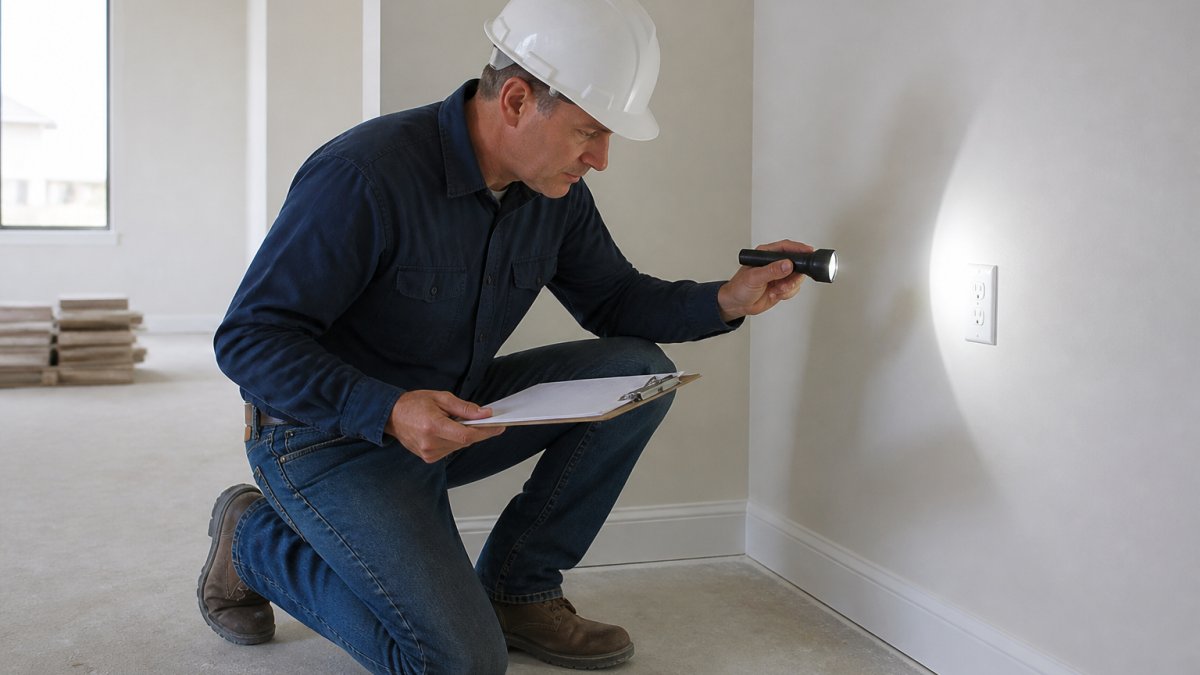
An independent home inspection is one of your best protections. Many buyers skip inspections, assuming the builder's warranty covers everything. The key advantage of new construction is the opportunity to inspect at multiple stages while systems are exposed and problems can be corrected before closing.
Stage 1: Pre-Framing or Foundation Inspection (Before Walls Go Up)
Schedule an inspection after the foundation is poured but before framing begins. An inspector can verify foundation level, grading slope, drainage systems, soil conditions, and utility rough-ins. Defects caught here are inexpensive to fix. Your contract should grant you inspection rights at this stage.
Stage 2: Pre-Drywall Inspection (After Framing, Before Walls Close)
This is the most critical inspection. Verify electrical wiring, plumbing rough-in, HVAC ductwork, insulation, air sealing, framing, and blocking. Hire a professional inspector with new construction experience who uses thermal imaging to verify insulation and ductwork sealing. Catching energy-efficiency problems before closing prevents years of regret.
Stage 3: Final Walkthrough (Before Closing)
Schedule a final inspection 24-48 hours before closing. Verify all agreed-upon work is complete, appliances operational, finishes match specifications, systems operational, and no damage exists. Bring a detailed checklist and take photos of defects. Request a written punch list and do not close until critical defects are addressed.
What to Include in Your Inspection Checklist
Your comprehensive checklist should cover:
- Foundation and structure: Cracks, settling, water intrusion, proper drainage
- Roof and exterior: Shingles, flashing, gutters, siding, weatherproofing, caulking
- Windows and doors: Operation, sealing, locks, weatherstripping
- Electrical system: Panel, breakers, outlets, switches, grounding, code compliance
- Plumbing: Leaks, water pressure, drain function, hot water, water heater
- HVAC: Furnace or heat pump operation, thermostat function, ductwork sealing, airflow balance
- Insulation and air sealing: R-value verification, gaps around penetrations, thermal imaging results
- Interior finishes: Drywall quality, paint, flooring, trim, doors, hardware
- Appliances: Installation, operation, documentation and warranties provided
- Grading and drainage: Slope away from foundation, no pooling, proper drainage
Schedule your independent inspections well in advance. Reputable inspectors book weeks ahead, especially during peak building season. Coordinate with your real estate agent and the builder's project manager to ensure access at each stage. Many builders require 48-hour notice before inspections; plan accordingly.
Builder Reputation and Developer Financial Stability
Not all builders are equal. A builder's reputation reflects their track record on quality, timelines, and customer service. A developer's financial stability determines whether they can complete your home if market conditions change.
Check online reviews, ask for references from previous buyers, verify licensing, and review financial statements. Some builders have strong reputations but are stretched thin financially. If a developer runs into cash flow problems, your home's completion date may slip indefinitely. Ask how many homes the builder has under construction, too many projects may compromise quality.
Protecting Yourself: A Contingency Plan
The best protection is a comprehensive plan before signing. Your contingency plan should include:
| Protection | Action | Timeline |
|---|---|---|
| Financial buffer | Set aside 5-10% of purchase price for unexpected costs | Before signing |
| Contract review | Have an attorney review the builder contract | Before signing |
| Inspection schedule | Plan pre-drywall and final inspections | During construction |
| Warranty documentation | Request written warranty terms and coverage details | At closing |
| Preferred lender | Work with a lender experienced in new construction financing | Before signing |
| Title insurance | Obtain owner's title insurance to protect against defects | At closing |
Work with professionals who understand new construction: a real estate agent experienced with new builds, a home inspector familiar with construction defects, and an attorney to negotiate contract language. The risks of buying new construction homes are manageable with the right preparation and support.
Buying a new construction home requires more than finding a floor plan you like. Our team offers independent builder comparisons, contract reviews, inspection coordination, and warranty follow-up support. Explore your options
Frequently Asked Questions
What are the biggest risks of buying new construction homes?
The primary risks include construction delays that push closing dates months beyond the promised completion date, hidden costs that inflate the total price well above the advertised base price, quality defects that emerge after closing when builder warranty coverage becomes critical, and unfavorable contract terms that limit your recourse if problems arise. Many homebuyers also underestimate the financial impact of upgrades, financing contingencies, and unfinished community infrastructure. Working with an independent consultant to review the builder contract, conduct staged inspections, and verify specifications helps identify these risks before you commit.
What costs are often left out of a new construction home's advertised price?
Builders frequently quote only the base price, excluding closing costs, property taxes, homeowners insurance, HOA fees, lot premiums for desirable locations, grading and drainage work, landscaping, interior upgrades, builder-required financing fees, and appraisal costs. Many communities also charge impact fees for infrastructure development. A realistic total cost budget should account for these expenses. New Home Hub SWFL helps buyers create a comprehensive cost breakdown that separates the base price from all additional expenses so you understand your true financial obligation.
Should you get an independent inspection on a new construction home?
Yes. Independent inspections at multiple stages catch construction defects, incomplete work, and code violations that builder walkthroughs often miss. Schedule inspections at the pre-drywall stage (before walls close), before closing, and during the final walkthrough. An independent inspector provides an unbiased assessment and creates a detailed punch list of repairs needed before closing. New Home Hub SWFL reimburses third-party home inspections up to $500 at closing, reducing the cost barrier to this critical protection step.
Can a builder delay the completion of a new construction home?
Yes, and delays are common. Backordered materials, labor availability issues, site conditions, and unforeseen construction challenges regularly push completion dates by weeks or months. Most builder contracts include force majeure clauses that protect the builder from penalty if delays result from circumstances beyond their control. Review your contract's completion-date language, liquidated-damages clause, and extension terms before signing. Understanding what happens if the builder misses the deadline, and what compensation you receive, is essential to managing schedule risk.