
Table of Contents
- What New Build Construction Management Support Actually Includes
- The New Home Construction Timeline: Milestones and Deliverables
- New Construction Home Costs and Upgrades: Budgeting and Cost Control
- Independent New Construction Home Inspection and Quality Control
- New Construction Walkthrough Checklist and Warranty Follow-Up
- How to Vet and Hire Construction Management Support
- Conclusion: Getting the Support Your Build Needs
- Frequently Asked Questions
Last Updated: October 14, 2026
What New Build Construction Management Support Actually Includes
New build construction management support is professional oversight of a home build on the buyer's behalf, covering project planning, contractor coordination, budget tracking, and quality checks from preconstruction through handover.
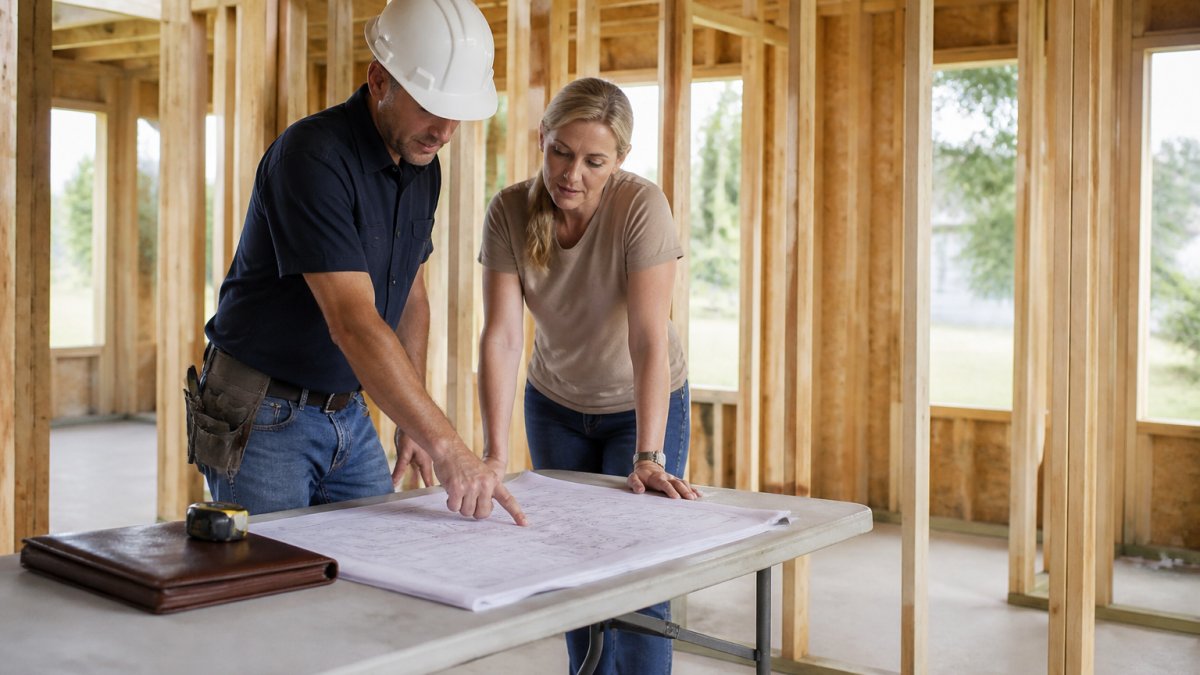
A builder's superintendent manages the trades and schedule to deliver the home on the builder's terms.
Here's what the work typically covers:
- Project planning and preconstruction: reviewing the purchase agreement, written specifications, and site plan before you sign
- Scheduling and timeline coordination: tracking milestones against the contract and flagging slippage early
- Subcontractor and trade coordination: understanding who is responsible for each phase and where handoffs fail
New home construction runs on dozens of small decisions. Miss one and it surfaces months later as a change order or warranty dispute.
Construction Manager vs. General Contractor vs. Owner-Builder
These three roles carry very different risk. A general contractor contracts directly with the owner, hires the trades, and carries liability for the finished home. A construction manager coordinates and advises but may not hold the trade contracts.
For most buyers purchasing from a production home builder, the builder is the general contractor. What you can hire is independent construction management support: someone who reads the contract, tracks the schedule, and inspects the work without a financial stake in the builder's margin.
The New Home Construction Timeline: Milestones and Deliverables
A typical new home construction timeline runs from contract signing to closing in roughly six to twelve months, depending on the builder, floor plan, and permitting. Custom builds stretch longer.
Track these milestones in writing, not from memory. At every milestone, you should be able to point to a document, a photo set, or a signed sign-off, not just a verbal "we're on track."
Preconstruction and Permitting (Weeks 0-8)
Preconstruction covers everything before the first shovel hits the ground, where the most expensive mistakes get locked in.
- Finalize the floor plan, elevation, and structural options
- Complete design center selections and get them in writing
- Confirm the lot premium, orientation, and any easements
Owner-facing deliverables at this stage:
- A signed purchase agreement with the written specification sheet attached as an exhibit
- A design center selection sheet listing every product by name, grade, and coverage
- A permit application receipt with the jurisdiction's review timeline
One common mistake is treating the design center appointment as a shopping trip. It is a contract amendment: every selection changes the specification sheet, and the specification sheet is what the builder is obligated to deliver.
Site Prep, Foundation, and Framing (Weeks 8-20)
Site prep clears and grades the lot. The foundation is formed, plumbed, and poured. Framing raises the structural shell. These three phases set the geometry of everything that follows, which is why they are the most expensive to correct later.
Owner-facing deliverables at this stage:
- Pre-pour inspection report verifying forms, rebar spacing, and plumbing rough-in
- Foundation survey or elevation certificate if the lot is in a flood zone
- Framing inspection report covering structural members, connections, and window flashing
The pre-pour and framing inspections are valuable independent checks in the entire build. Once concrete is poured or drywall is hung, corrections multiply in cost.
Rough Mechanicals and Pre-Drywall (Weeks 20-28)
Rough mechanicals cover electrical, plumbing, and HVAC runs before the walls close, the last window to see inside the walls without cutting them open.
Owner-facing deliverables at this stage:
- Pre-drywall inspection report verifying electrical panel layout, plumbing drain slopes, and HVAC duct sizing
- A marked-up set of plans showing any field changes made during rough-in
- Confirmation that all rough inspections have passed the municipal code review
This is an important inspection point in the schedule if you want to catch problems while they are cheap to fix. After drywall goes up, the cost of correction multiplies.
Finishes, Final Inspection, and Handover (Weeks 28-40+)
The finish phase installs insulation, drywall, trim, cabinets, counters, flooring, fixtures, and paint, followed by the final municipal inspection, the certificate of occupancy, and closing.
Owner-facing deliverables at this stage:
- A final walkthrough checklist with every defect photographed and a written repair timeline
- The certificate of occupancy from the local jurisdiction
- The builder's warranty documents, including the workmanship, systems, and structural terms
Do not close before you have the warranty terms in hand.
Reporting Cadence: What a Good Update Looks Like
A milestone schedule is only useful if someone reports against it. Ask any construction management provider what their reporting cadence looks like before you hire them. A workable standard is:
- Weekly: a short written update listing completed milestones, upcoming milestones, and any open items
- Monthly: a budget-to-actual report showing base price, options, change orders, and projected total
- Per milestone: a photo set and inspection report tied to the specific phase
If a provider cannot show you a sample of each of these before you sign, that is the reporting you will receive, or not receive.
New Construction Home Costs and Upgrades: Budgeting and Cost Control
New construction home costs and upgrades go far beyond the base price on the flyer. The advertised number is a starting point, not a total, and buyers who budget only for it are the ones surprised at closing. Build the full picture in four buckets:
| Cost Bucket | What It Covers | Watch For |
|---|---|---|
| Base price | Floor plan, standard finishes, lot | Excludes most upgrades |
| Structural options | Extensions, added rooms, ceiling height | Priced before design center |
| Design center selections | Flooring, cabinets, counters, fixtures | Largest source of overage |
| Closing and carrying | Closing costs, prepaids, insurance, HOA | Often overlooked entirely |
Cost control starts with the specification sheet. Ask for the written specifications and compare them line by line against the marketing brochure. Where the brochure says "luxury vinyl plank," the specification sheet names the actual product, grade, and coverage, not always the same thing.
Change orders are where budgets quietly break. Every change after contract signing typically carries a markup and can reset permit or inspection timelines. Get every change in writing with a price and schedule impact before you approve it.
Independent New Construction Home Inspection and Quality Control
An independent new construction home inspection is a third-party evaluation of the home's structure, systems, and finishes at key stages of the build.
Schedule independent inspections at:
- Pre-pour, before the foundation is poured, to verify forms, rebar, and plumbing rough-in
- Framing, to check structural members, connections, and window flashing
- Pre-drywall, to verify electrical, plumbing, and HVAC rough-in before walls close
- Final, to review finishes, fixtures, and systems before closing
At New Home Hub SWFL, we reimburse third-party home inspections at closing up to $500, so the cost of independent verification does not fall entirely on you.
Quality control also means asking questions on site.
New Construction Walkthrough Checklist and Warranty Follow-Up
A new construction walkthrough checklist turns the final walkthrough into a documented inspection. Bring it, use it, and photograph everything you flag.
Use this checklist at your final walkthrough:
- Test every outlet, switch, and light fixture
- Run all faucets, check for leaks under every sink
- Flush every toilet and check for slow drains
Warranty follow-up is where most buyers lose momentum. New homes typically carry a one-year workmanship warranty, a two-year systems warranty, and a longer structural warranty, though terms vary by builder.
If the builder drags their feet, your written log is the evidence. Verbal requests disappear. Documented ones do not.
How to Vet and Hire Construction Management Support
Vetting construction management support comes down to three questions: what do they actually do, what do they charge, and what happens when the builder pushes back. Get clear answers to all three before you sign anything.
Step 1: Define the Scope You Need
Construction management support is not a single product. It ranges from a one-time contract review to full oversight from preconstruction through the warranty period. Decide which of these you actually need:
- Contract and specification review only, a one-time read of the purchase agreement, specification sheet, and site plan before you sign
- Inspection coordination, scheduling and interpreting independent inspections at pre-pour, framing, pre-drywall, and final
- Full project oversight, ongoing schedule tracking, budget-to-actual reporting, change order review, and warranty follow-up
Scope drives price. A provider who quotes a single number without asking which of these you need is guessing.
Step 2: Understand the Fee Structures
Owner-facing construction management fees generally fall into four models. Ask which applies and what triggers additional charges.
| Fee Model | How It Works | Best For | Watch For |
|---|---|---|---|
| Flat fee | One price for a defined scope | Contract review, single-phase inspection | Scope creep; get the deliverable list in writing |
| Hourly | Billed per hour worked | Ad-hoc questions, mid-process entry | No cap; ask for a not-to-exceed estimate |
| Percentage of purchase price | A percentage of the home's price | Full oversight on a custom build | Percentage base, is it the base price or the total with options? |
| Per-inspection | A set price per inspection stage | Buyers who only want independent eyes on the build | Does it include report writing and follow-up? |
A common pattern is a flat fee for contract review plus a per-inspection fee for each stage. Ask for the total in writing before you commit, and what happens if the build extends past the original schedule.
Step 3: Check Credentials and Insurance
Ask for these documents before you sign. A provider who hesitates is telling you something.
- Business license in the state where the build is located
- General liability insurance with a certificate of insurance naming the coverage limits
- Errors and omissions (E&O) coverage if they are providing professional advice or reports
Some construction managers hold credentials from trade or industry organizations. Ask what training or certification they hold and how long they have done this work. Experience with your specific builder matters more than a generic credential.
Step 4: Read the Contract Scope Carefully
The engagement letter or service agreement should name every deliverable explicitly. Look for:
- What is included: contract review, inspection coordination, reporting cadence, warranty follow-up
- What is excluded: legal advice, engineering stamps, direct negotiation with the builder's attorney
- Term and termination: how either side ends the agreement, and what happens to work in progress
A provider who cannot produce a written engagement letter is not offering a professional service.
Step 5: Ask the Hard Questions in the Interview
Use these questions in every interview. The answers tell you more than the marketing.
- What is included in the scope? Contract review, inspection coordination, and warranty follow-up should be named explicitly, not implied.
- How are fees structured? Flat, hourly, percentage, or per-inspection, and what triggers additional charges?
- What happens when the builder refuses to budge?
We do not publish a flat fee because scope varies by build stage and project complexity. What we will do is walk you through the structure before you commit, so there is no surprise line item later.
Step 6: Decide Between a Construction Manager, General Contractor, and Owner-Builder
Before you hire support, confirm which role you actually need. These three carry very different risk.
- General contractor: contracts directly with the owner, hires the trades, and carries the liability for the finished home. In a production build, the builder is the general contractor.
- Construction manager: coordinates and advises but may not hold the trade contracts. This is the role most buyers actually hire as independent support.
- Owner-builder: takes on both the contracting and the coordination. This shifts liability to you and typically complicates financing and insurance.
For most buyers purchasing from a production home builder, you are not hiring any of these. The builder is the general contractor. What you can hire is independent construction management support: someone who reads the contract, tracks the schedule, and inspects the work without a financial stake in the builder's margin.
The trade-off is real. A construction manager cannot force a builder to change a contract term.
Conclusion: Getting the Support Your Build Needs
New construction rewards buyers who ask questions early and document everything. The builders who deliver on time are not always the cheapest.
New Home Hub SWFL exists for exactly that. We independently compare local builders, costs, and floor plans, reimburse third-party home inspections at closing up to $500, and guide you through financing, insurance, and warranty follow-up from first search to final walkthrough.
Get started with New Home Hub SWFL and walk into your build with clarity.
Frequently Asked Questions
What does construction management support include for a new home build?
Construction management support covers project planning and preconstruction, scheduling and trade contractor coordination, budgeting and cost control, purchasing and materials management, design coordination and change orders, on-site supervision and quality control, and owner-facing reporting. For a homebuyer, it also includes reviewing written specifications against builder marketing claims, tracking milestones, and managing warranty follow-up after handover. The exact scope depends on your build stage and project complexity, so confirm what is and is not included before you hire anyone.
Can a homebuyer hire an independent construction consultant?
Yes. Homebuyers can hire an independent consultant to review builder contracts, compare floor plans and specifications, monitor the new home construction timeline, and coordinate an independent new construction home inspection. Because the consultant is not employed by the builder, they can ask harder questions about allowances, change orders, and upgrade pricing. Many buyers bring one in before signing, and some add support later for inspections or the walkthrough.
How much does construction management support cost, and what fee structures are common?
Fee structures vary. Some consultants charge a flat fee per phase, some bill hourly, and others work on a percentage of construction cost. Pricing depends on the scope you need, the number of properties, and how long the build runs. Ask for a written scope before you commit, and confirm whether third-party inspection costs are separate. For current pricing on support packages, check the provider's website or request a quote.
How can I keep a new construction home build on schedule and within budget?
Start with a written project scope and a milestone-based schedule, then track both weekly. Review new construction home costs and upgrades before you sign, since allowances and design center selections are where budgets usually move. Request change orders in writing with pricing before work proceeds, and schedule an independent inspection before drywall and again before closing. A construction manager or consultant can run this tracking for you and flag slippage while there is still time to correct it.
What should I ask a construction management consultant before hiring them?
Ask what specific services are included at each phase, who reviews your contract and specifications, how often you receive written progress reports, and what happens if the builder pushes back on a finding. Confirm their experience with your type of residential construction and whether they have handled warranty disputes. Also ask how they are paid, whether they accept any compensation from builders, and how they document issues so you have a record if a dispute arises.